Back to work
Case Study — Product Design Internship

Workrise —
designing the vendor profile
experience

Project focused on improving how vendor users manage, showcase, and find meaning in their profiles. Allowing user profiles to stand out and win more work.

Role
Product Design Intern
Company
Workrise (now known as Rigup)
Timeline
Summer 2024
Tools
Figma · Dovetail · GitHub · Hex
Team
Chuck (Mentor) · Anna (Manager) · Raveen (Eng) · Mitch (PM)
Workrise vendor profile redesign
Workrise — Vendor Profile Redesign, Summer 2024

Vendors couldn't find meaning in their profiles

Workrise connects clients and vendors in the skilled trades and energy sector — streamlining everything from sourcing to payments. But despite the platform's reach, vendors were disengaged from a core part of the experience: their own profiles.

During my time at Workrise, I conducted problem discovery which allowed me to investigate why vendor users found it difficult to manage their profiles, and to design solutions that would make the experience more meaningful, personalized, and effective at showcasing what makes each vendor unique.

3
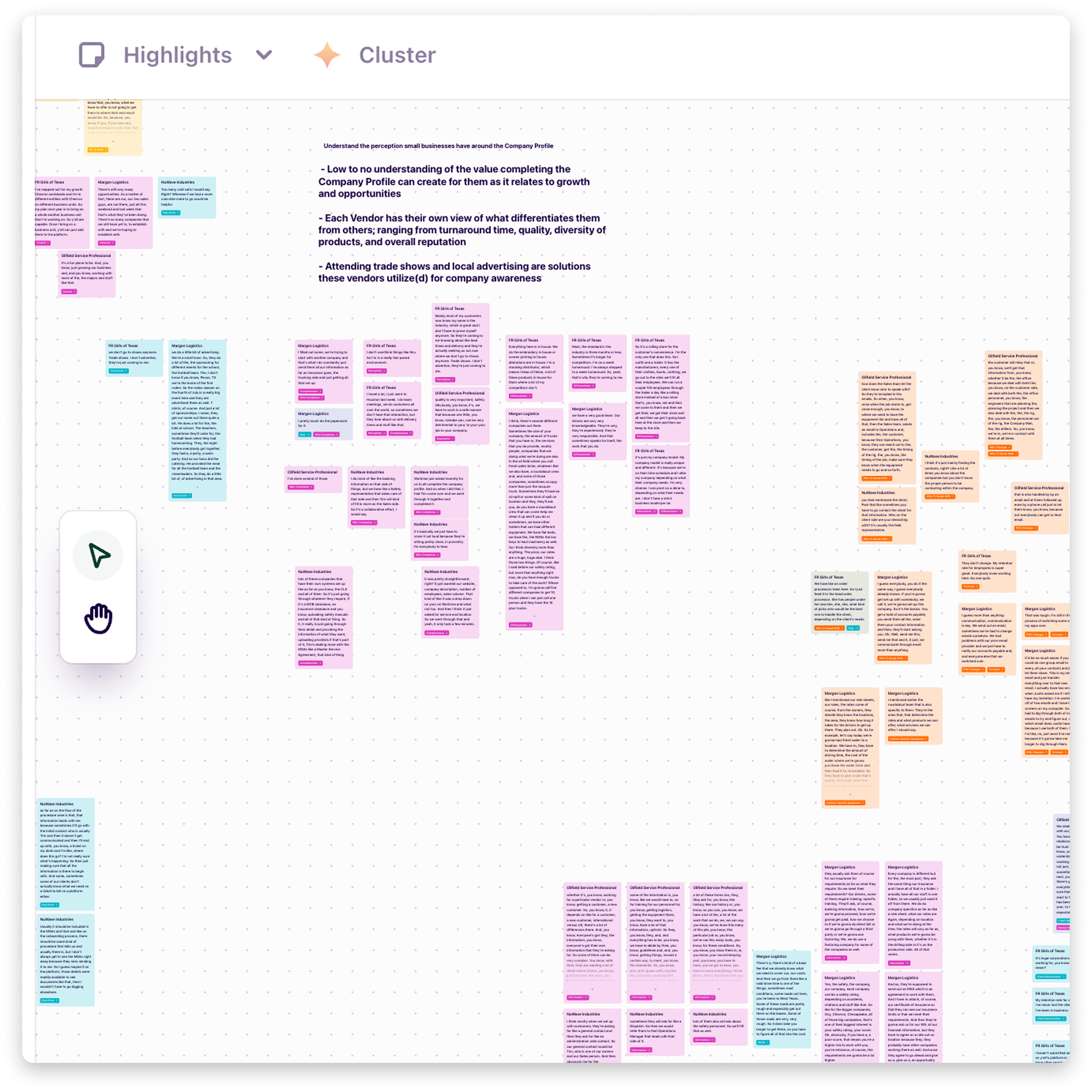
Core problem areas identified across vendor experience
3
Design hypotheses tested through mid-fi and hi-fi iterations
1
Live user testing session with a Sales Engineer at DXP Enterprises

A platform built for the field

Workrise is an operations platform for the skilled trades and energy industry. It connects clients with vendors, streamlines field operations, and handles everything from sourcing and staffing to bid management and payments.

Its core products include vendor management, staffing and payroll, and bid management — making it an end-to-end solution for companies that rely on a distributed workforce to get work done.
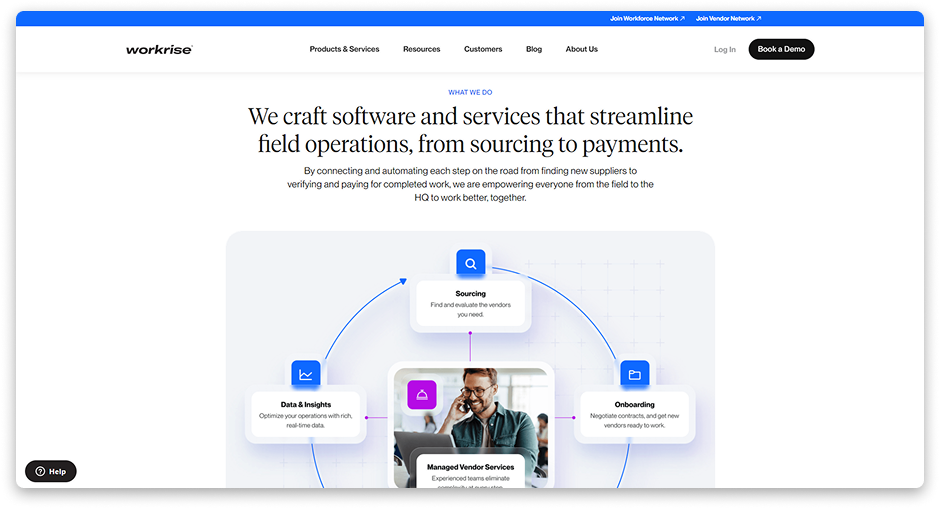
Workrise platform overview

How might we improve vendor profiles?

This prompt opened up a design challenge centered on improving an existing experience. The goal was to identify where the current vendor profile fell short and produce impactful design decisions that would help vendors better represent themselves on the platform.

The Problem

Vendor users found it difficult to find meaning in managing their profile. Opportunities existed to improve existing features, expand educational reminders, and understand competitors to explore additional personalization features.

Problem 01 The visual hierarchy of information is confusing — users don't know where to focus or what matters most.
Problem 02 Poor communication of value in profile completion — vendors don't understand why maintaining their profile matters.
Problem 03 Lack of customization and personalization — vendors can't truly differentiate their company or brand through the profile.

Understanding the current experience

I began with a deep dive into the existing vendor profile experience, mapping where users were dropping off and where the design was failing to communicate value. Three distinct friction areas emerged that shaped the entire design direction.

Finding 01 The Value of Vendor Network Users weren't receiving enough information or reminders on the value of optimizing their profile for client consumption.
Finding 02 Vendor Differentiation Current profile-building options didn't allow users to truly personalize their profile through data and branding.
Finding 03 Vendor UX The profile was functional but felt like a skeleton — not visually enticing, and it didn't encourage users to re-engage with their content.

Over 2000 vendors but only 273 have completed their profiles.
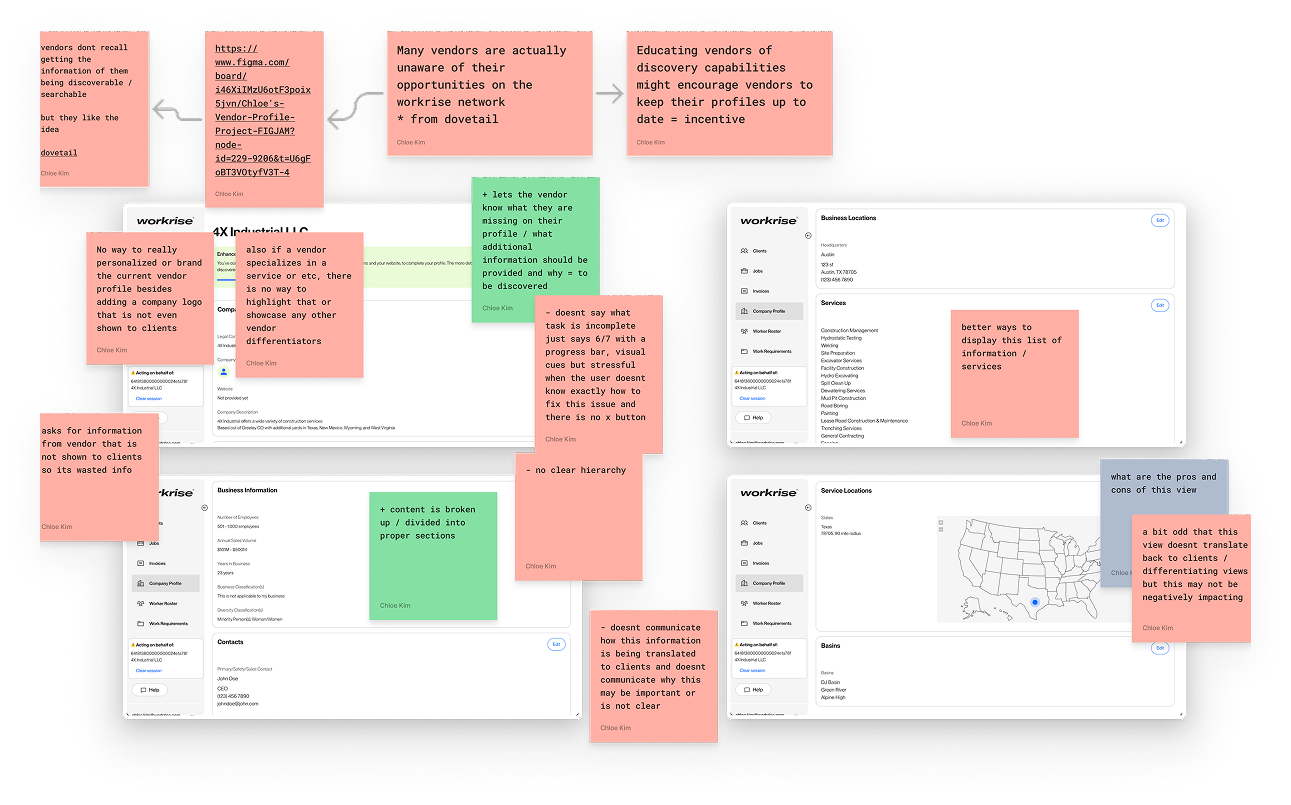
Current vendor profile experience audit Workrise vendor profile main pain points

Current state vendor profile — highlighting the key areas where visual hierarchy, value communication, and personalization fell short.


Market research

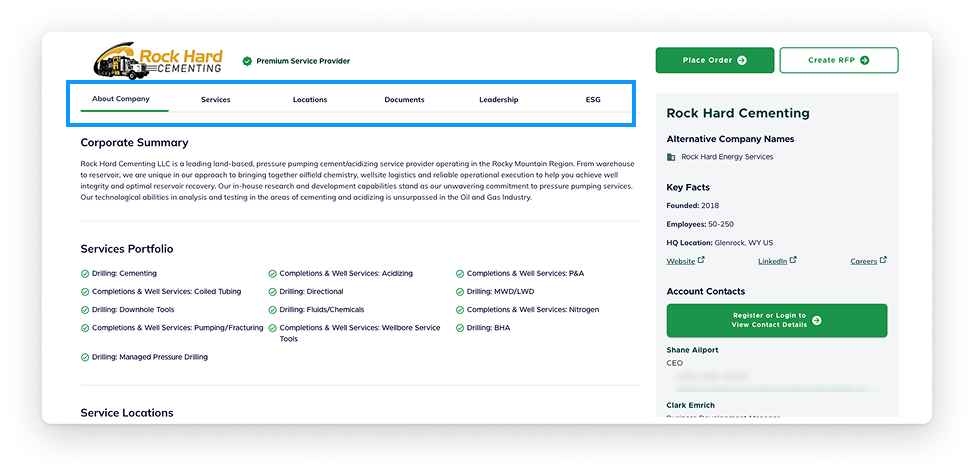
I audited competitor platforms to understand how they handled vendor and company profile experiences — identifying patterns in hierarchy, personalization, and value communication that Workrise could learn from and adapt.
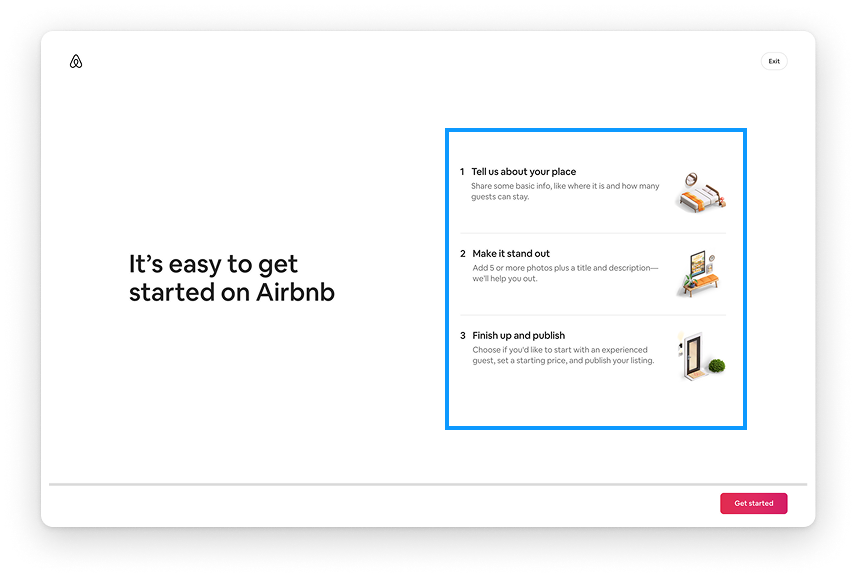
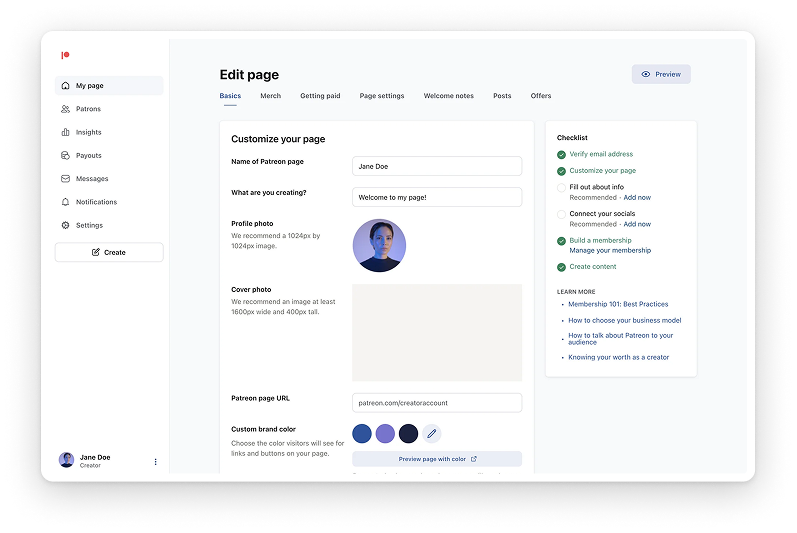
Competitive analysis — platform 1
Competitive analysis — platform 2
Competitive analysis — platform 3

Solution discovery

Based on research findings, I formed three hypotheses to guide the design direction, each targeting one of the core problem areas.

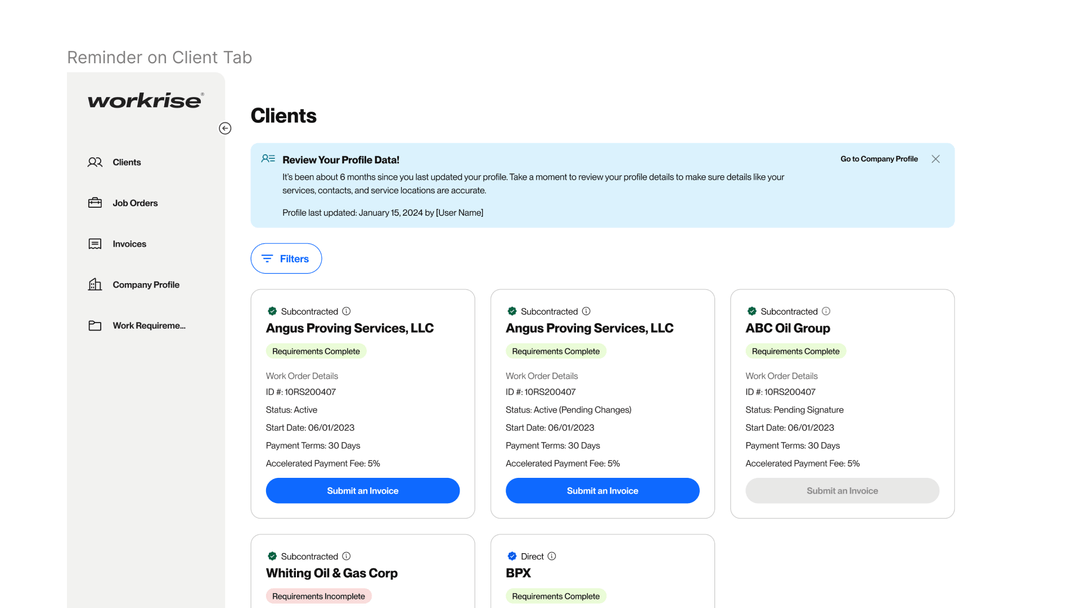
🔔
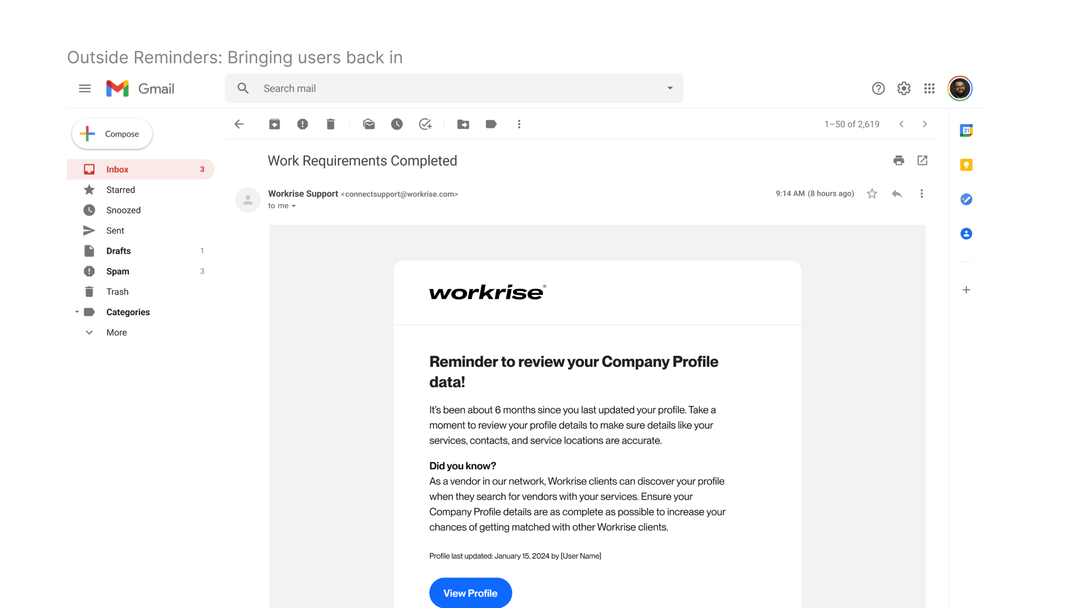
Intentional Reminders
If we add more intentional reminders around profile maintenance, vendors will be more likely to re-engage with their profile data because they're getting consistent updates about the value of keeping it current.
🎨
Differentiation Tools
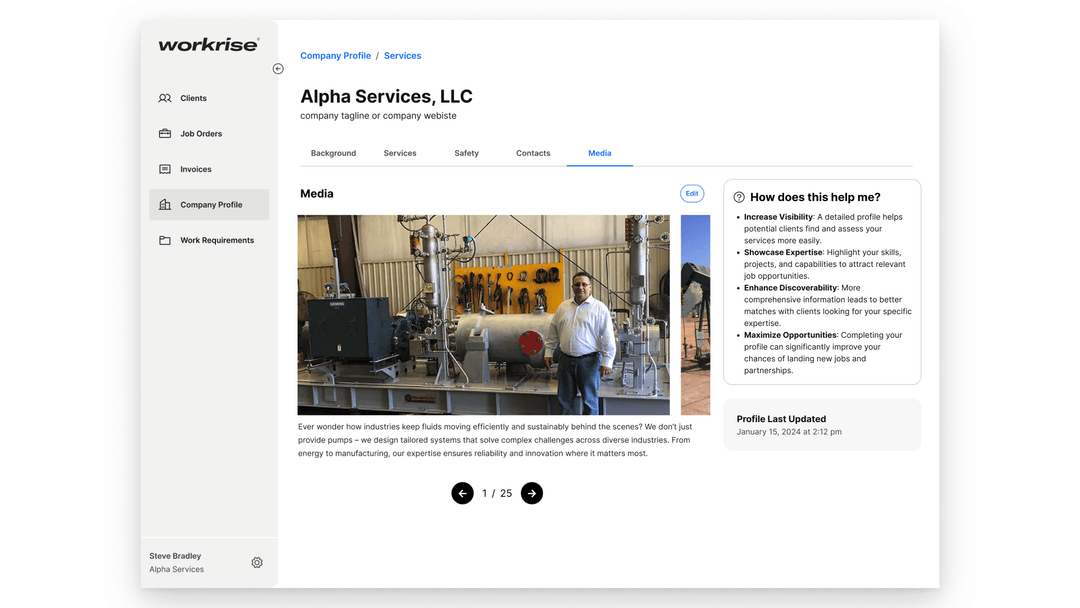
If we give vendors profile editing tools that enable them to showcase and differentiate their services, they'll be more likely to refine their profile information so it's more enticing to clients.
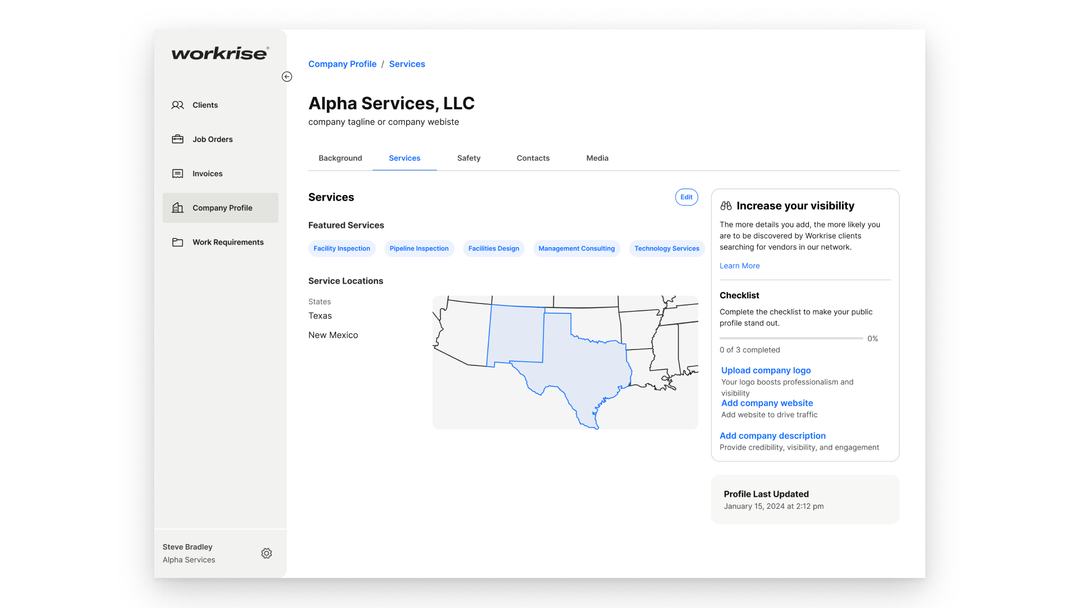
👁️
Visibility of Consumption
If we more prominently display how vendor data is being consumed by clients, vendors may better understand how to position the information they want to share in their profile.

Sketches to wireframes to prototypes

The design process moved through rapid ideation, structured wireframing, and iterative refinement. I always tethered to user feedback and scoped to what was achievable within the internship timeline.
Phase 01
Sketching & Ideation
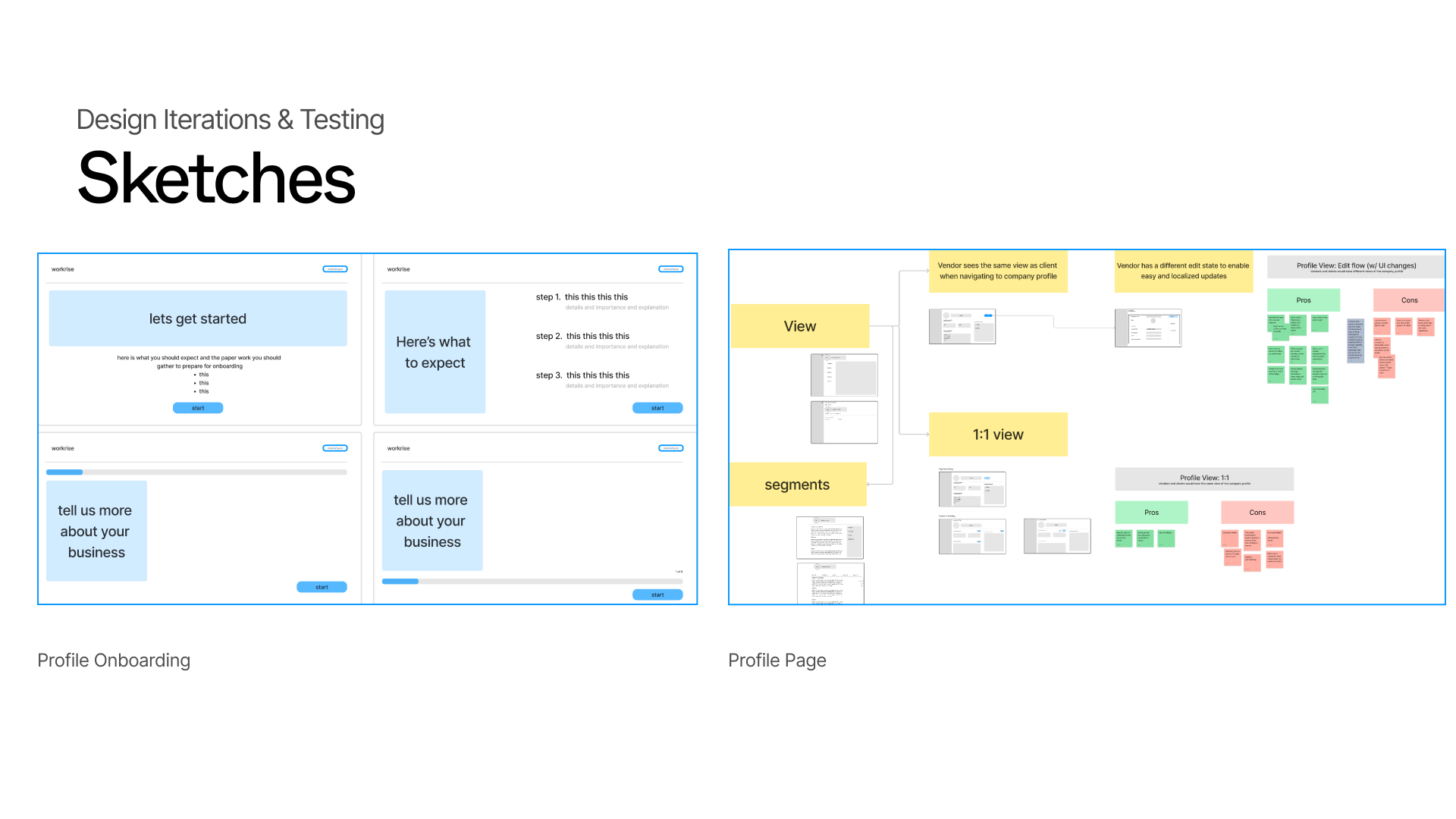
I explored a wide range of ideas through rough sketches, pushing on different ways to surface value, reorganize hierarchy, and introduce personalization. I love beginning my design projects with physical low-fidelity prototypes.
Early sketches for Workrise vendor profile

Early sketch explorations across profile hierarchy, reminder patterns, and personalization features.
Phase 02
Scope Decision
After early feedback, I decided to focus improvements within the profile space even though opportunities were discovered in the profile onboarding (FTUE) experience. Staying scoped kept the work actionable and shippable within the internship timeline.
Phase 03
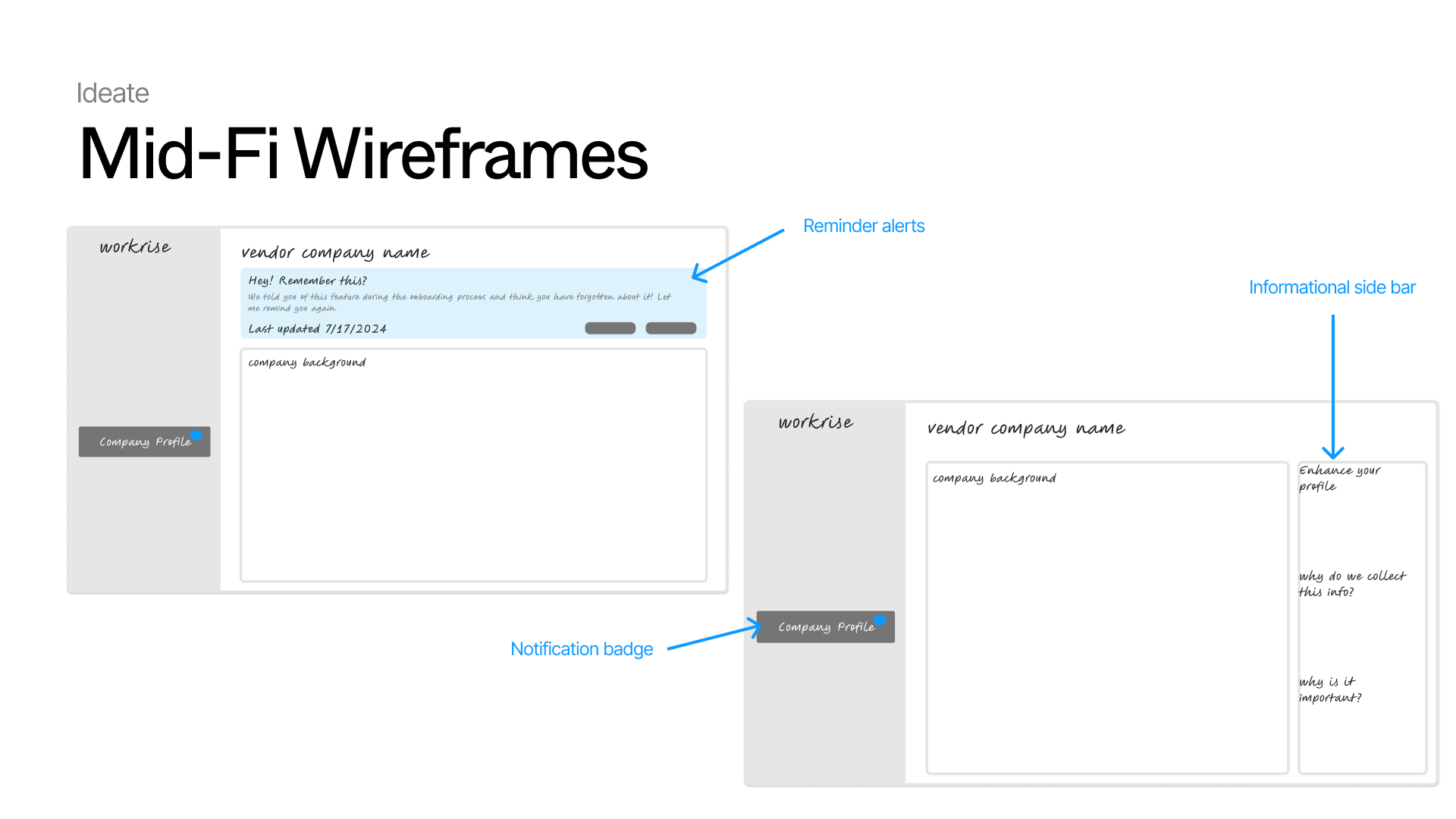
Mid-fi Wireframes
I moved into structured mid-fidelity wireframes to test layout hypotheses, information hierarchy, and the placement of new features. These were reviewed with my design mentor Chuck and PM Mitch before progressing to hi-fi.
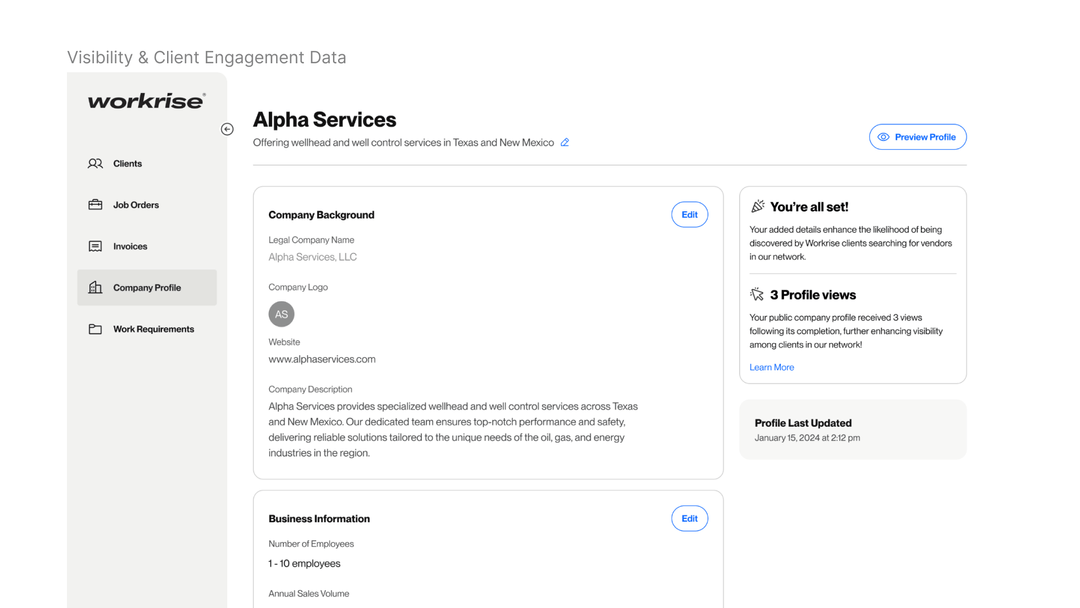
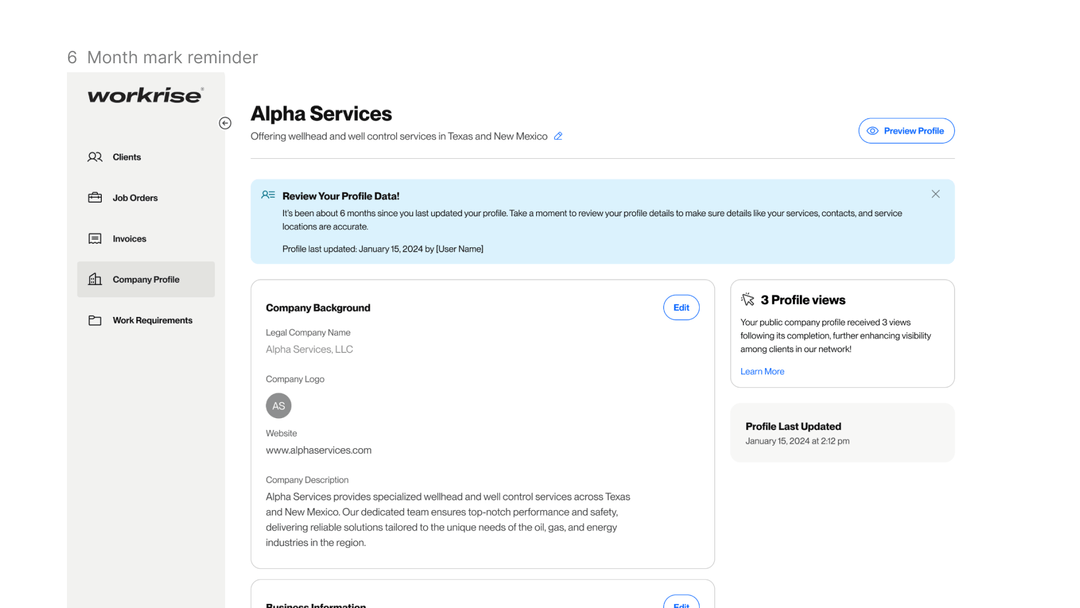
Mid-fi wireframes overview
Mid-fi wireframe — success state Mid-fi wireframe — visibility Mid-fi wireframe — 6 month mark
Mid-fi wireframe — reminder Mid-fi wireframe — email

Prototype testing

I conducted a live user testing session with Daniel, a Sales Engineer at DXP Enterprises who has experience building and managing profiles for a large-cap company. I walked him through two hi-fi screens and conducted a structured debrief.
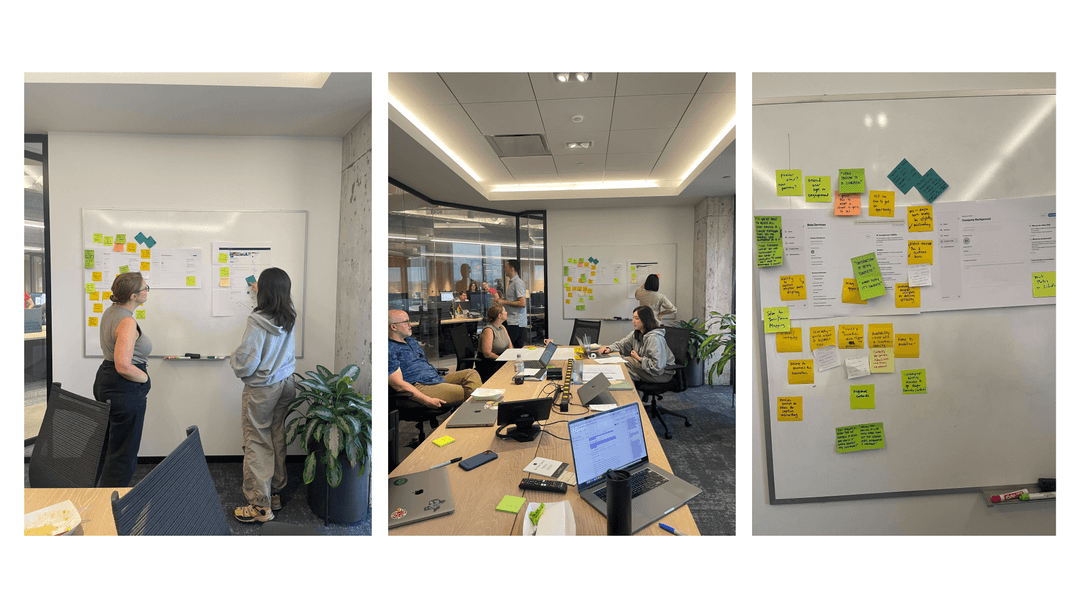
User testing session with Daniel
Insight 01 Hierarchy matters: Daniel's top priority was "what services do I provide and how?" — followed by areas of operation and years in business.
Insight 02 Storytelling gap: Daniel wanted to see more pictures and videos — and questioned how those could increase visibility with clients.
Insight 03 Visibility confusion: Daniel experienced confusion with the intentions behind the info cards — context was missing for the design concept to land.

"I want to control how I market my company. Pictures and videos — that's what makes a difference."

— Daniel, Sales Engineer at DXP Enterprises
Design responses ✓
  • Reorganize information hierarchy based on what users want to see first
  • Give vendors control over how they market themselves with pictures and videos
  • Present content with context so users understand the intention of each design element
Remaining challenges →
  • Balancing vendor personalization with platform-wide consistency
  • FTUE (first-time user experience) improvements remain out of scope for this phase
  • Measuring impact of profile improvements on actual client engagement

The hi-fidelity designs

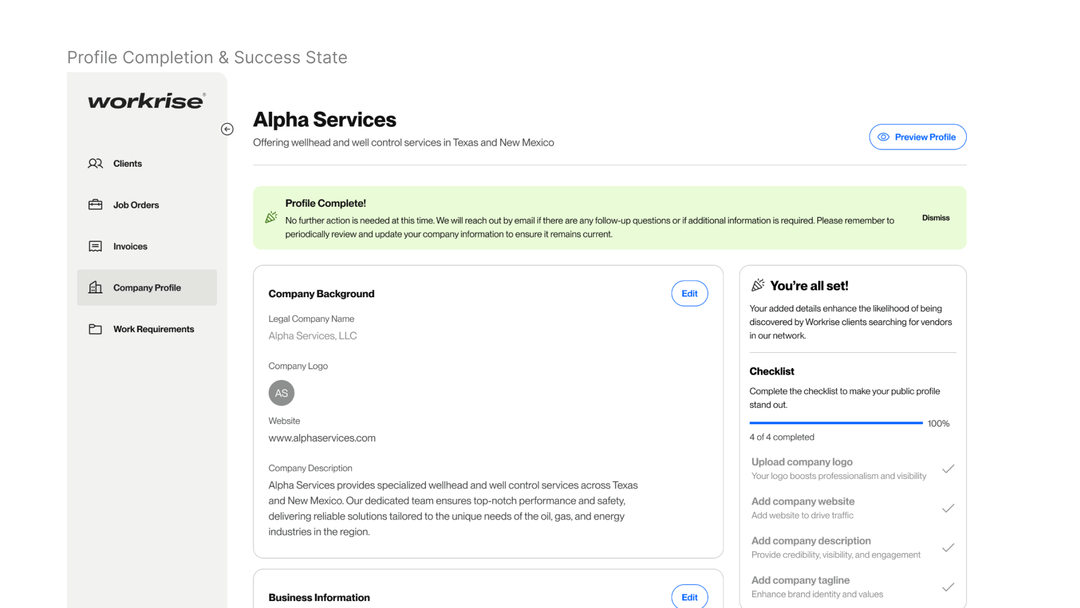
The final hi-fidelity designs addressed all three core problem areas — clearer hierarchy, richer personalization, and stronger communication of profile value — while staying within the scope of the profile space.
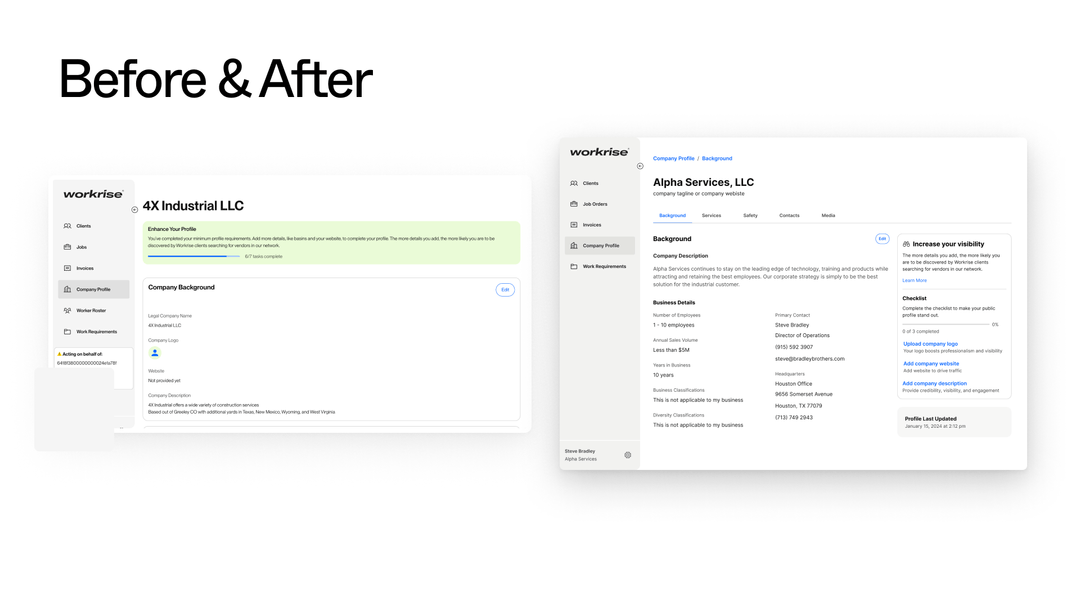

Hi-fi vendor profile redesign

Redesigned vendor profile — improved hierarchy, value communication, and personalization options.
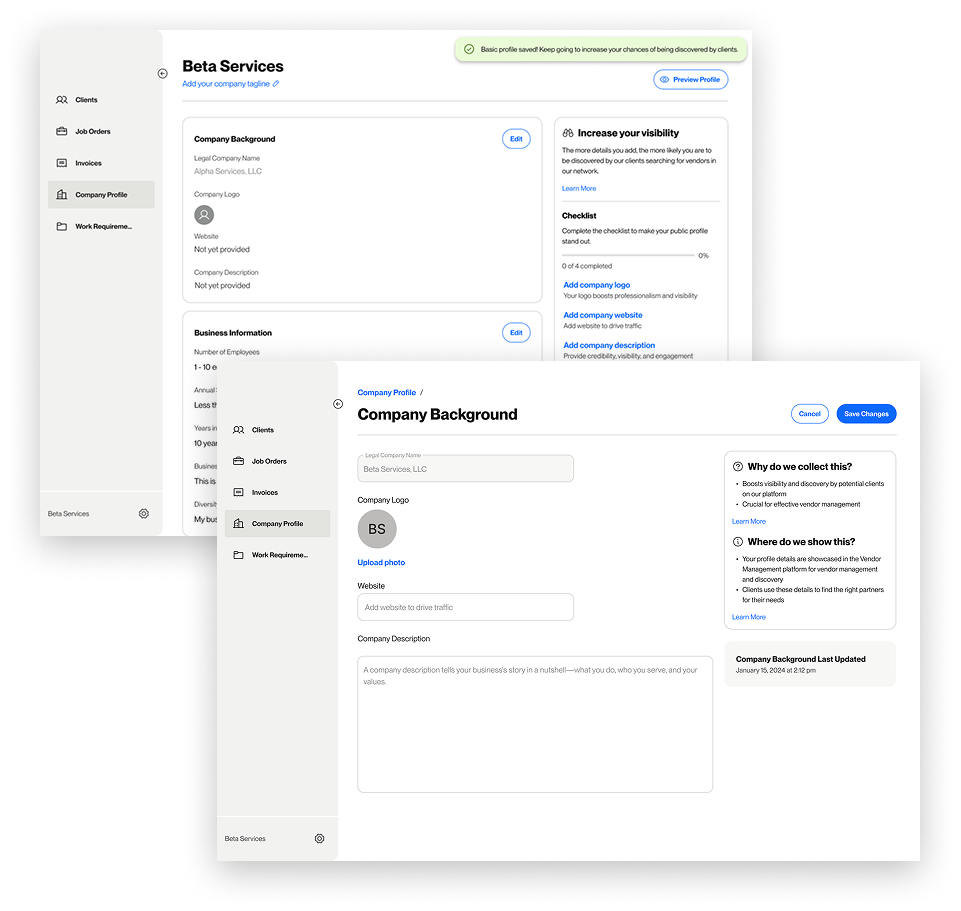
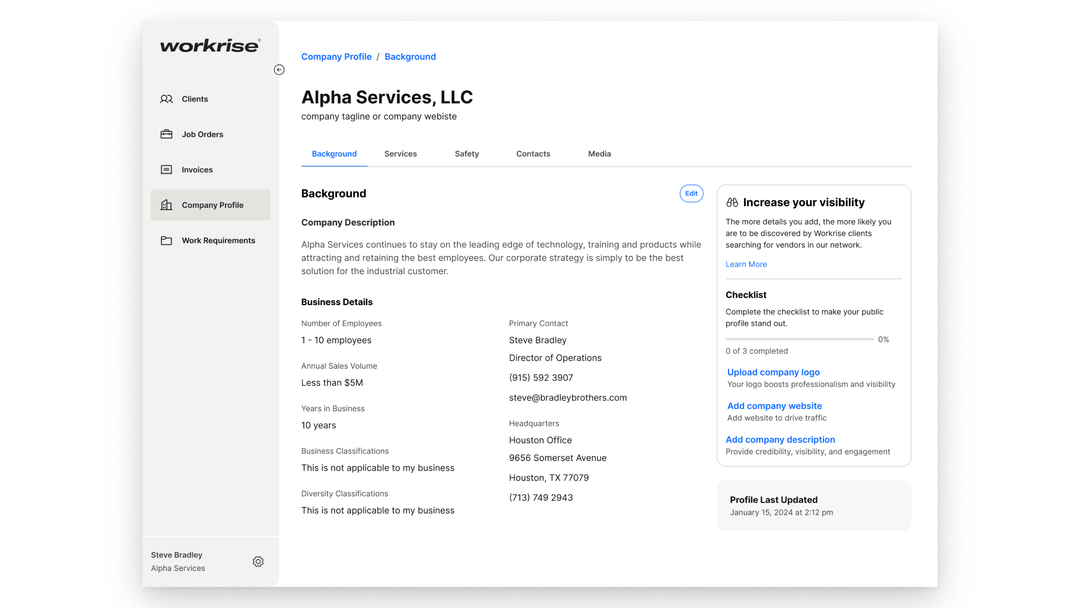
Hi-fi screen — profile header and services
Hi-fi screen — areas of operation
Hi-fi screen — media and storytelling
Hi-fi screen — profile completion and reminders
10 — Project Takeaway

What I learned

Working at Workrise taught me that design is never static and being open to change is what separates good work from great work.

I left the internship with a deeper appreciation for user research, empathy in design, and the satisfaction of seeing my work ship to production.

01
Embrace iterations
There's always room for improvement. Being vulnerable in design reviews and open to change is how you grow.
02
Research is a lifecycle
I learned the full arc of user research — preparing, conducting, debriefing, and feeding insights back into iterations. Each step makes the next one better.
03
Empathy takes time
Understanding users doesn't happen instantly. Experience mapping, competitive analysis, and actual conversations all combine to let you design with real goals in mind.
04
Meet expectations
Seeing the work in production — and knowing it met both my own standards and my team's — was one of the most rewarding parts of the whole experience.
← Previous Back to all work Next project → Zen Meditation