Back to work
Case Study — Eco-Centric Design

Zen Meditation —
co-designing a meditative
interface with plants

A biofeedback-driven meditation experience that bridges the gap between human and plant consciousness — exploring what it truly means to design with nature, not just for it.

Role
Product Designer
Course
Eco-Centric Design: Interspecies Co-Creation
Timeline
Spring 2025 – Present
Tools
Figma · Adobe Illustrator · p5.js · VS Code
Outcome
UT Senior Design Capstone Exhibition 2025
Zen — A Shared Meditative Space for Human & Plant
Try Zen ↗ Full Process on Notion ↗

What if the user isn't only human?

Zen emerged from a design brief with a bold premise: study the umwelt — the perceptual world — of a non-human co-inhabitant and turn it into a creative work co-designed with that species. My co-designer? A plant.

Rather than designing a product about plants, I wanted to design with them. The result is a meditative interface that listens to plant bioelectrical signals in real time, translating their responses into a shared sensory environment that guides both the human and the plant through a mutual moment of stillness.

Zen challenges traditional user-centered design by asking what happens when we expand the definition of "user" to include all living things.

10+
Participants in live meditation sessions
2
Species co-designing the experience
1
UT Capstone Exhibition feature (2025)

Problem and guiding questions

Professor Jiabao Li's Eco-Centric Design course challenged us to go beyond anthropocentric assumptions — to deeply study a non-human species and build something that genuinely honors its perspective.

I chose plants because they sit on the edges of our attention. We share spaces with them daily, yet rarely consider their agency or intelligence.

The Problem

As climate change accelerates and biodiversity collapses, humans continue to treat plants as backdrop, resources to consume rather than beings to coexist with. Technology mirrors this indifference, built entirely for human attention. What if we designed systems that fostered empathy toward the living world, starting with the plants we share our spaces with?

HMW 01 How can plants communicate with us through data and real-time interaction?
HMW 02 What does empathy look like across species boundaries?
HMW 03 How can we co-design systems that nurture both human and non-human wellbeing simultaneously?
HMW 04 What does mindfulness feel like when it's shared between two different kinds of life?

Plants can communicate — we just don't listen

Plants exhibit a form of electrophysiology — generating measurable bioelectric signals that shift in response to light, touch, and human presence. I studied plant neurobiology to understand how these signals propagate, giving me the foundation to translate plant responses into a real-time data stream.

Plants don't just passively exist — they respond, adapt, and communicate. I wanted to make that invisible conversation visible.
Finding Plants produce real-time bioelectric signals measurable through galvanic sensors attached to leaves and soil.
Finding Human presence — breathing, movement, sound — causes measurable shifts in plant bioelectric output.
Finding Biofeedback-driven visuals significantly increase mindfulness depth in existing meditation research.
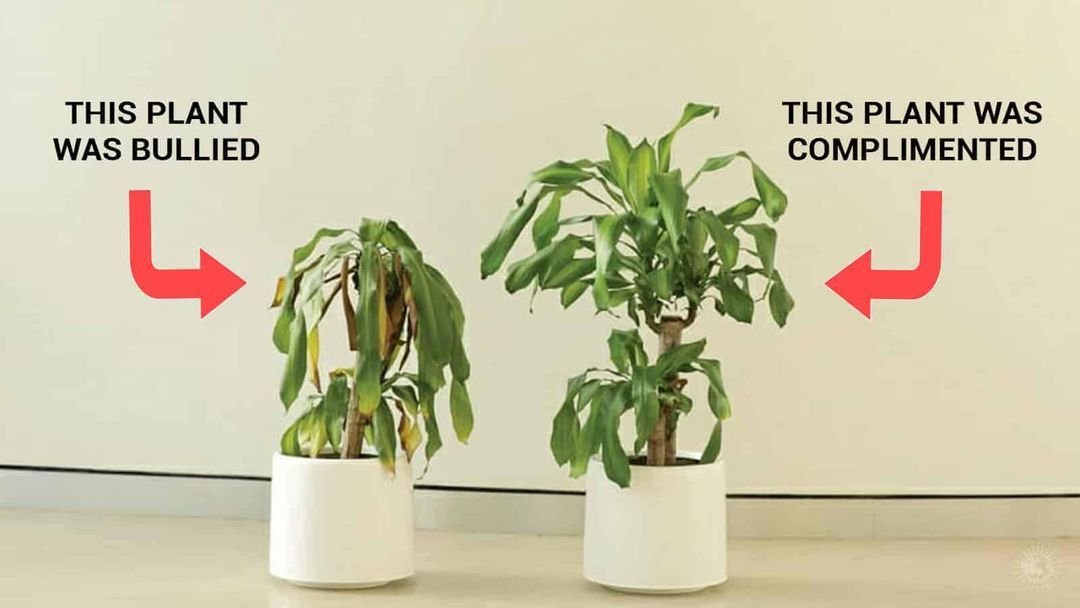
Plants can communicate — bullied vs complimented plant experiment

An experiment showing how plants respond differently to negative vs. positive human speech — evidence that plants are sensitive to their environment and the beings around them.


Designing for coexistence

Three principles anchored every design decision. Ensuring the final experience genuinely honored both the human and plant perspectives rather than using plant data as mere decoration.
🌱
Interspecies Reciprocity
Both species contribute equally to the experience. The plant's bioelectric signals shape what the human sees and hears. The human's presence and breathing affect the plant's environment.
📡
Real-Time Biofeedback
Plant responses are not pre-recorded or simulated — they're live data streams that create a truly unique experience every session.
🧘
Shared Mindfulness
The interface guides both user types toward stillness — calming the human through visual and auditory design while creating a stable, quiet environment for the plant.
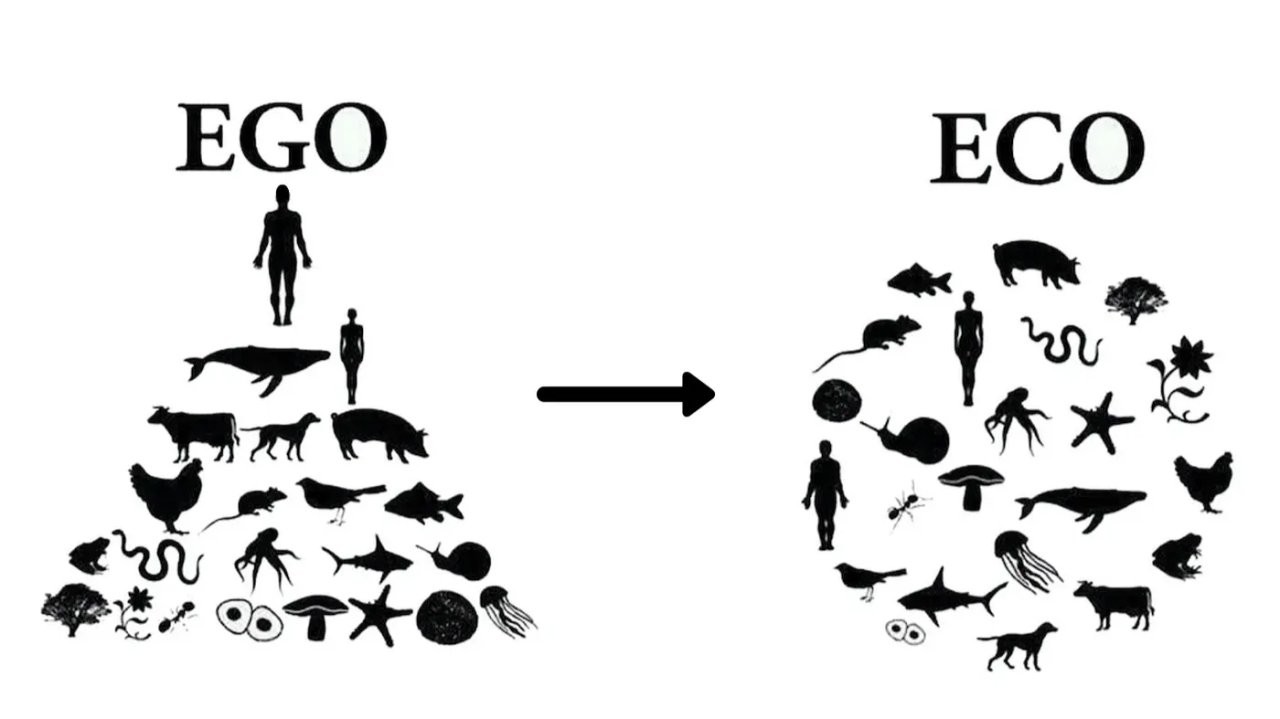
Ego to Eco — shifting from human-centered to interspecies design

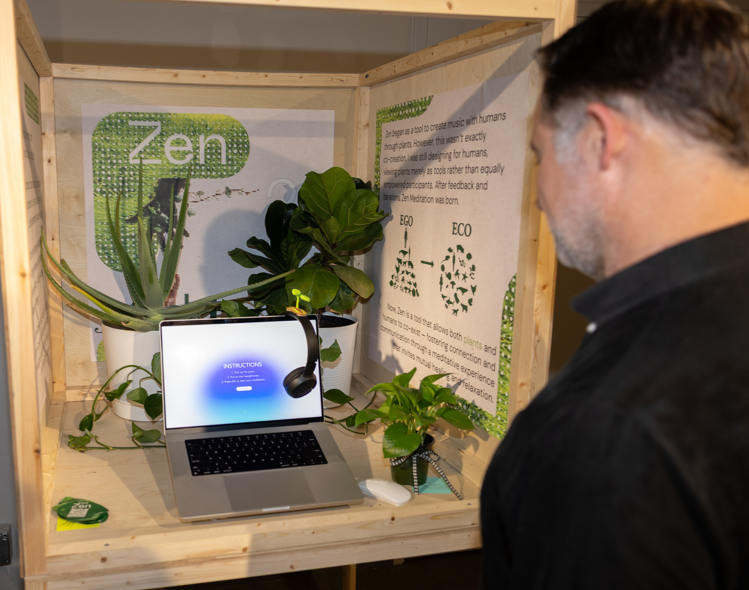
From EGO to ECO — a conceptual shift from human-at-the-top hierarchical thinking toward a circular, interspecies model of coexistence that informed Zen's design philosophy.


From instrument to meditation partner

The design process was iterative and deeply experimental.
Phase 01
Plant as Instrument
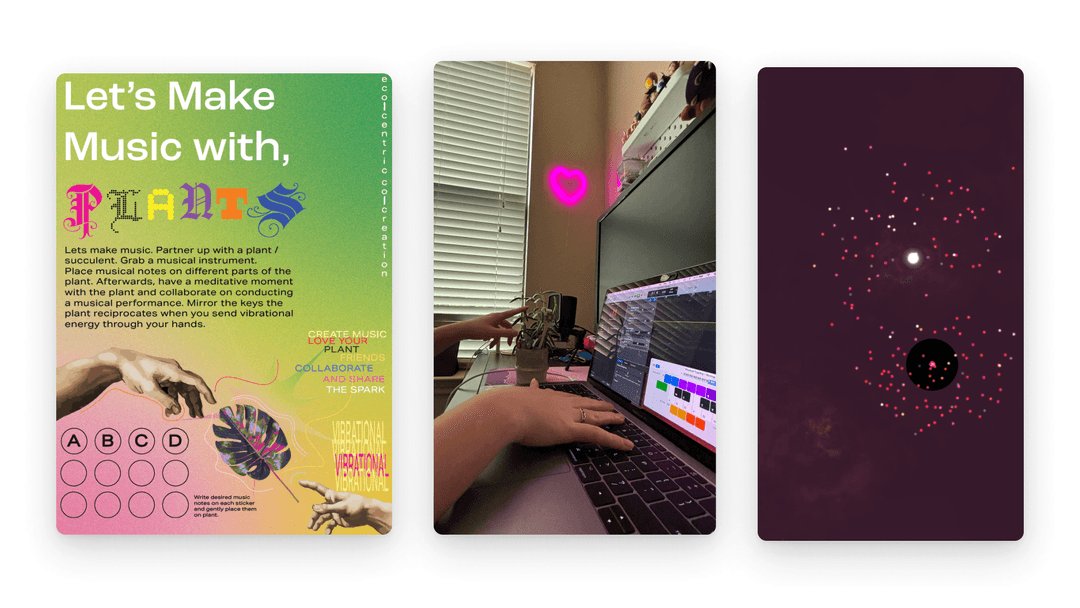
My first iteration explored using plants as musical instruments, translating their bioelectric signals into sound waves and visualizers. The concept was compelling but I quickly realized the plant was being treated as a tool rather than a co-creator. It was still a human-centered approach with a plant as prop.
First iteration: making music with plants

My first iteration was using plant leaves as piano keys and made a poster that I would hand around campus to allow others to create their own plant-based compositions. Then I moved to Garage band and iTunes music where I was able to create a song and view the visualizer.
Phase 02
Conceptual Pivot: Meditation as Dialogue
I shifted from performance to presence. Instead of extracting plant data for entertainment, what if we simply sat with it? The meditation frame recontextualized plant signals as a form of emotional communication rather than raw input to be processed.
Phase 03
Prototyping in Code
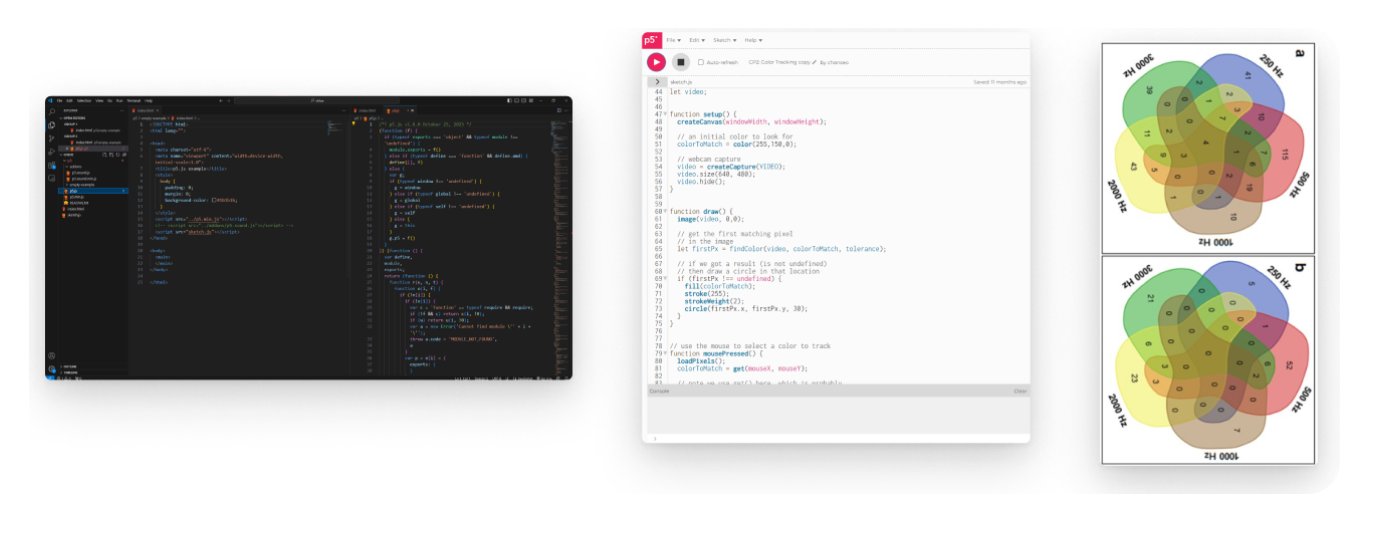
I built the meditation software from scratch in VS Code using p5.js, HTML, CSS, and JavaScript, writing my own data pipeline to interpret sensor input and map it to visual parameters including breathing animations, color shifts, and ambient sound layers.
Coding the initial meditation software in VS Code with p5.js

Building the meditation interface with p5.js lib. and VS Code, and with color visulizer of frequencies.

Phase 04
User Testing with 10+ Participants
Conducted live meditation sessions where participants meditated alongside a plant connected to the Zen interface. Gathered qualitative feedback on emotional response, interface clarity, and the sense of connection to the plant co-meditator.

User testing session 1

User testing session 2

Phase 05
Refinement and Exhibition
Incorporated user feedback, refined the UI, and prepared the experience for the UT Senior Design Capstone Exhibition, where Zen was featured among the cohort's graduating projects.

What 10+ meditators told me about coexistence

I recruited 10+ participants for the Zen meditation experience. Sessions lasted around 10 minutes. I observed and then conducted brief semi-structured debriefs on their experience.

Insight 01 Participants felt genuine curiosity about the plant and wanted to learn more about the plant + its possible growth.
Insight 02 Hearing the natural frequency noise could be unpleasent or unnerving.
Insight 03 Users wanted to track their own growth alongside the plant's.
Insight 04 Because of the lack of visual feedback and user interface clarity, some participants felt confused about how to interact with the system.

"It was new and different to meditate with the thought of plants as a co-occupant. But it was nice and calming."

— Zen participant feedback
What worked ✓
  • Real-time plant presence created space for empathy
  • p5.js visuals were calming and responsive
  • The framing of "co-meditation" resonated emotionally
What to improve →
  • Camera + sensor calibration in variable lighting
  • Human UI interactions needed more affordance clarity
  • Shared growth tracking was a highly requested feature (possible space for data visualization)

The hi-fidelity experience

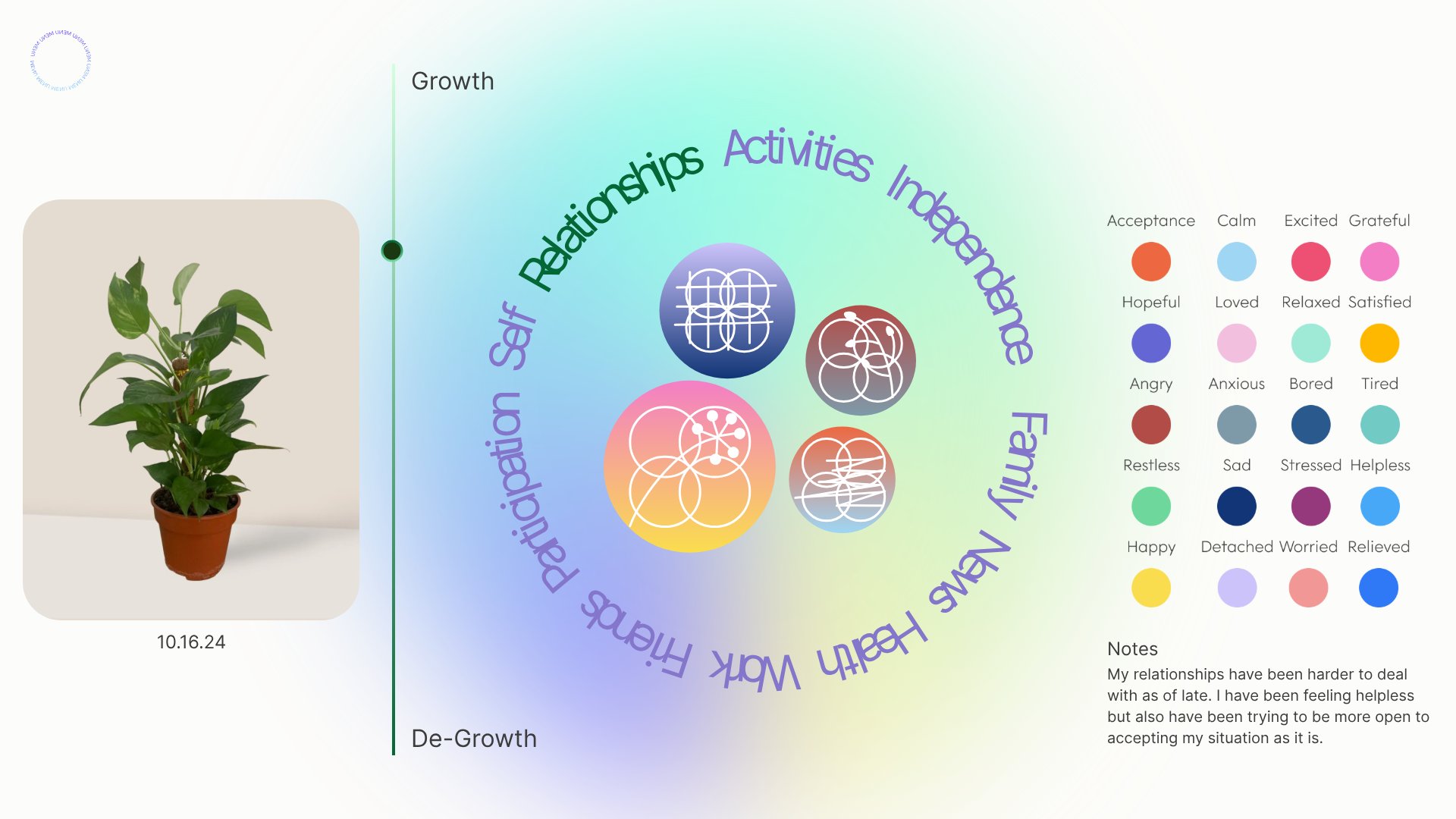
Introducing Zen Meditation. Web and mobile app where humans and plants co-exist in a shared space. I added journaling, emotion tracking, and shared growth visualization to deepen the human–plant relationship beyond a single session.

Hi-fidelity prototype walkthrough

Mobile Experience
Mindful Journal Entries
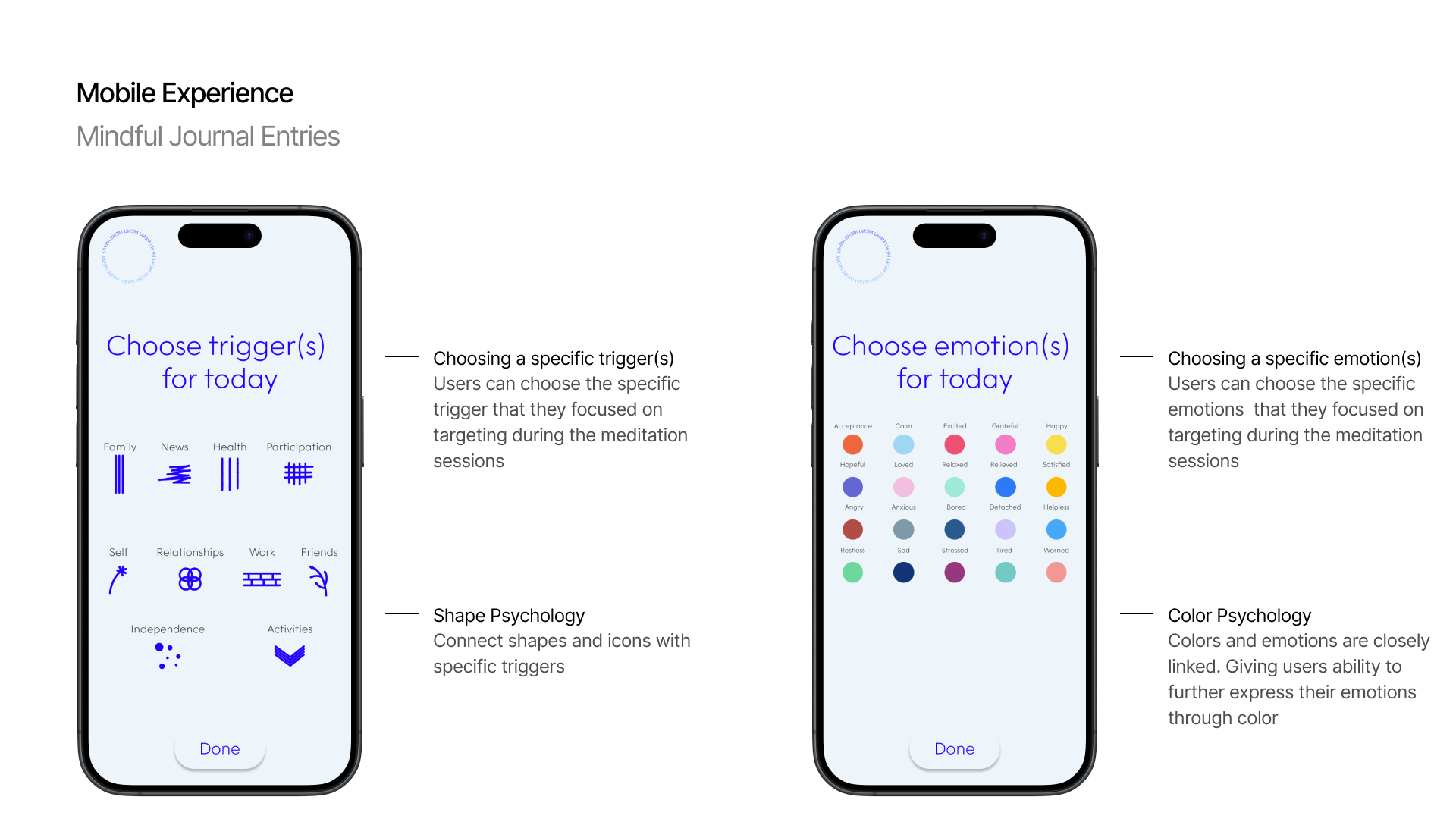
Zen mobile experience — mindful journal entries with trigger and emotion selection
Shape Psychology
Users choose specific triggers they focused on during their session — each represented by icons rooted in shape psychology to create a visual shorthand for stress, relationships, and wellbeing. #Mappingemotions
Color Psychology
Emotions and color are closely linked. The palette gives users a richer vocabulary for how they actually feel — moving beyond simple happy/sad binaries into nuanced emotional self-awareness.
Mobile Experience
Data Visualization
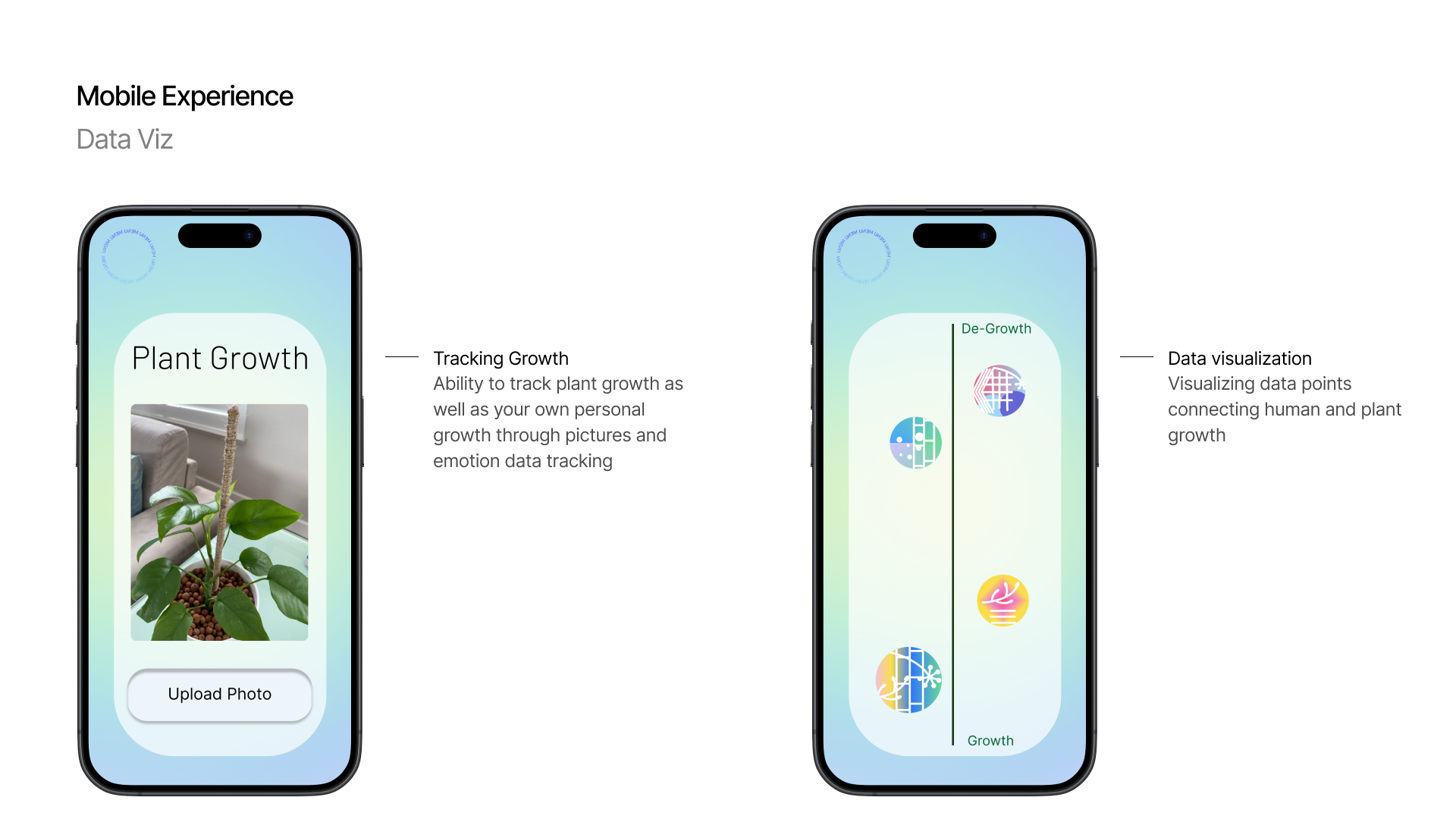
Zen mobile experience — plant growth tracking and shared data visualization
Tracking Growth
Users can log their plant's growth over time through photos alongside their own emotional data — building a living record of the parallel journeys of human and plant co-inhabitant.
Shared Data Visualization
A data layer connects human emotional states with plant growth metrics, visualizing their intertwined trajectories across sessions — making the relationship between meditator and plant tangible.

Featured at UT's Senior Design Capstone

Zen was featured at the University of Texas at Austin's Senior Design Capstone Exhibition in 2025 — a recognition of both the conceptual ambition and technical execution of the project.

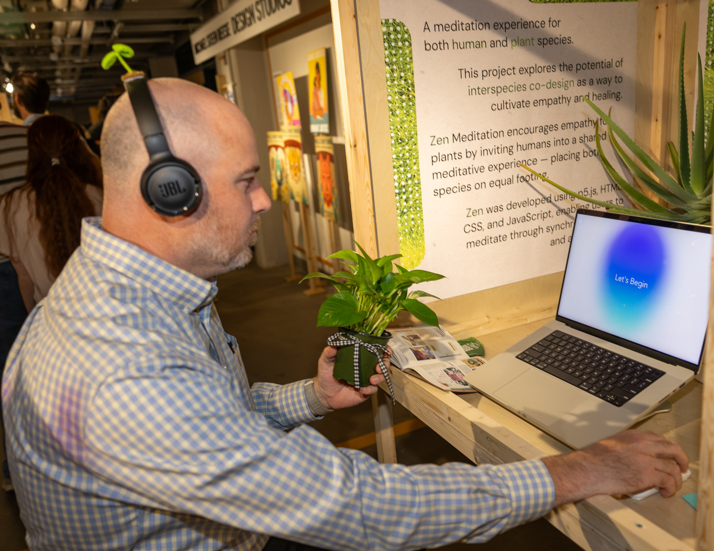
The exhibition context amplified Zen's impact: visitors could sit with the plant and experience the interface live, many of them encountering the idea of plant intelligence for the first time.

Zen at UT Capstone Exhibition
Visitors experiencing Zen at the exhibition
Zen plant interface at the Senior Design Capstone

The conversation continues

Zen is a living project. The next chapter focuses on deepening the interspecies dialogue through richer data and broader reach.

📊
Shared Growth Visualization
Build a data layer that tracks and visualizes both human and plant states over time — showing their shared growth across multiple meditation sessions.
🔄
Refined UX Flows
Redesign the onboarding and session flows to better accommodate first-time users and varied plant sensor setups, reducing friction in setup.
🌍
Ecological Awareness
Explore how Zen could connect to broader ecological awareness — linking personal meditation data to environmental health metrics in a user's local area.
10 — Project Takeaway

Designing with nature opens a conversation technology rarely has.

Zen taught me that the most meaningful design questions come from expanding who we consider a stakeholder. When we design with nature rather than for convenience, we're forced to slow down, to listen, and to reconsider what interaction even means.

It also taught me that research, code, and empathy aren't separate disciplines — they're a single practice when you're designing at the edge of what's been done before.
01
Expand who counts as a user
The most interesting design problems emerge when you include stakeholders who can't speak for themselves — and find ways to listen anyway.
02
Code is a design tool
Writing my own p5.js environment was inseparable from the design process — prototyping in code let me discover what was impossible to find in Figma.
03
Technology can reconnect
Zen showed that digital tools don't have to distance us from the natural world — designed thoughtfully, they can deepen our relationship to it.
← Previous Back to all work Learn more → About Chloe